
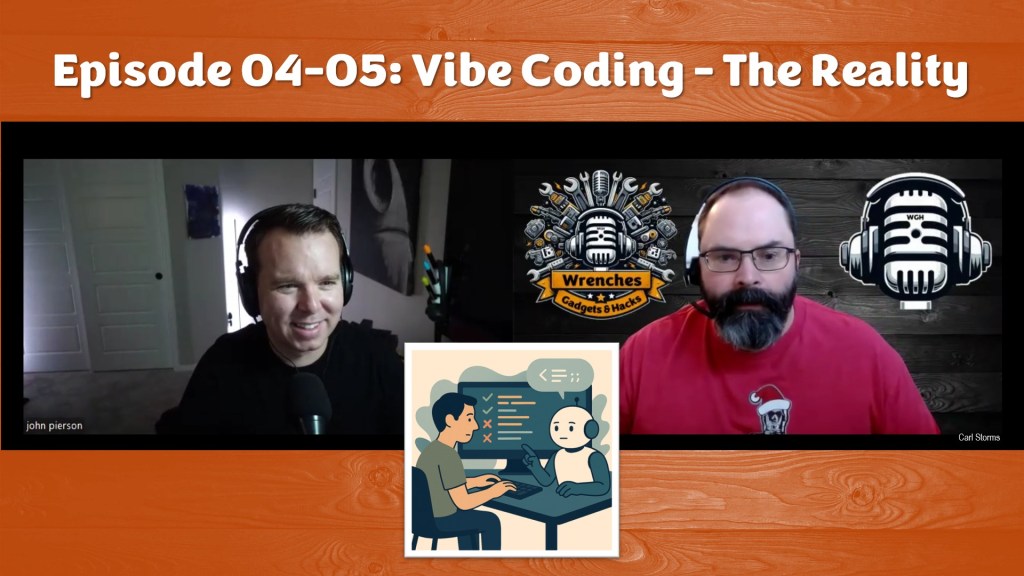
Welcome back to Wrenches, Gadgets & Hacks! This is the fifth episode of Series 4, The Great Unknown, and we’re still surfing the AI wave known as vibe coding. The vibes have finally evened out and now we’re looking at the reality of what vibe coding actually is.
This episode wraps up the Vibe Coding mini series by grounding everything in the spot where the hype meets the headaches. Carl and John dig into what sticks after the novelty wears off, what becomes part of a normal workflow, and what still manages to surprise them.
It is realistic, helpful, funny, and packed with the kind of practical insight that comes from actually using these tools instead of just talking about them. Whether you are tinkering with apps, wrestling with code, or trying not to vaporize your token budget, this episode will hit home.
And don’t forget to check out the companion blog on TheBIMsider.com: Vibe Coding: The Reality.
Be sure to stick around to the end, and learn about these points👇(just click the Click to Continue Reading and See Show Notes)

Key Discussion Points:
Finding the Tool That Finally Clicks:
John talks about hopping between countless platforms, signing up for way too many accounts, and eventually landing on a tool that actually fits his workflow. The excitement, the inbox chaos, and the payoff all show up here.
The True Cost of Vibe Coding:
Both hosts dig into how fast token bills can pile up. A few screenshots, a bigger model, or the wrong prompt at the wrong time can turn a fun session into a surprise $5 mistake in under two minutes.
Describe It or Lose It:
Carl and John hammer home the importance of explaining your problem clearly. Whether you use the classic rubber duck trick or unload your thoughts into an LLM, vague instructions always come back to bite.
When Screenshots Become Luxury Items:
John shares how certain models in his tool of choice can’t read images, forcing him to rethink how he explains bugs. This turns into a discussion on model limits, workarounds, and why describing visuals in text can actually make you better.
Using AI Without Letting It Drive the Car:
Emails, notes, code, prototypes: the hosts break down where AI genuinely helps and where it turns into a crutch. The message is clear, do the thinking first, let the AI assist second.
The Markdown Advantage:
Carl explains how markdown keeps things fast, cheap, readable, and reusable. Planning sessions, roadmaps, recaps, and downloadable logs become part of a smarter workflow, not just noise.
Know When to End the Chat:
They talk about the moment when a chat session gets tired, starts repeating itself, or gives worse answers. Closing it, starting fresh, and using what you learned becomes a key part of staying sane.
Wins, Losses, and Learning Anyway:
From animated SVG victories to hitting weekly limits at the worst moment, the episode lands on this truth: every success and failure teaches you something. That mix of progress and chaos is the real vibe coding experience.
You can listen to the podcast, HERE, the Spotify player at the start of this post, or on your favorite podcast app. If you prefer visual content, be sure to check out the video on YouTube.
Show Notes:
🧠 AI & LLM Tools
💻 Coding & Development Tools
- Kilo Code
- Cursor
- Notepad ++
- espanso – Tired of typing the same sentences over and over? Discover the incredible power of a full-blown text expander.
- GitHub
- VS Code
- Markdown PDF (VS Code Extension, should also work in Cursor)


⚙️ Development Practices and Concepts
- Tips for Real-World Vibe Coding – Check out all the tips talked about in the companion blog on TheBIMsider.com: Vibe Coding: The Reality.
- SMS to Google – This old school way of talking to Google is long gone, but was super cool
- Token Costs – A major theme: screenshots, model switching, and long chats quickly increase spend.
- Model Limits – Certain Kilo Code models cannot read images, forcing text based bug descriptions.
- Roadmapping with AI – Carl’s system: have the AI create a roadmap, then update it each session and store it in markdown.
- Session Fatigue – LLMs degrade near the end of a long chat. Starting fresh often fixes bad outputs.
- Code Cleanup and Review – End stage pass where the AI reviews the entire codebase for consistency, comments, and dead debugging logic.
- Rubber Duck Debugging – Still relevant, even with AI. If you can’t describe the problem, you don’t understand the problem.
Note: The vibes settled, the reality landed, and yes, AI helped tidy up this write up. 🤖🛠️
You can find all of the WGH links in one place with our 👉 BIO LINK
Also a BIG Thanks to Alex Grohl for our amazing intro and outro music “Indie Hey Song (Lost Fragments)” You can find more great royalty-free music from Alex on Pixabay
If you enjoy the podcast content and wish to show your support, consider buying the show a coffee ☕👉 Buy the Show a Coffee
 Wrenches Gadgets & Hacks